
Gay Rights Are Human Rights

Earlier this week, President Obama issued a memorandum on “Respecting the Rights of Hospital Patients to Receive Visitors and to Designate Surrogate Decision Makers for Medical Emergencies.” The memo requires all hospitals that participate in Medicaid and Medicare to (1) Allow patients to designate who is able to visit them, and (2) Follow the advance medical directives of their patients, such as durable powers of attorney and health care proxies.

Yesterday, a Circuit Court Judge in Arkansas issued an order striking down an Arkansas law that prohibits any unmarried person who has a non-platonic relationship with someone they live with from either adopting or fostering a child.

These two decisions are being trumpeted as victories for gay rights, as they should be. But the gay rights promoted by these decisions are only a component of the much broader category of human rights that are being recognized here — the associational rights of all persons. In other words, the decisions recognize peoples’ right to establish interpersonal relationships in the manner that best serves their individual needs, and not in the manner dictated by social tradition. In a free society, we should be free to choose which relationships we want to have with which people, and the degree of importance to be attributed to each of those relationships. The government has no business in deciding on everyone’s behalf which sorts of relationships “count” — i.e., only those between kin and those between opposite sex spouses.

The Executive Memorandum issued by Obama was a no-brainer that should have been done decades ago. Hospitals do not operate on the free market — people just don’t get to pick and choose hospitals based upon the associational rights they recognize. In the case of sudden injury, people can be transported to a hospital not of their choice. Or, in the case of rare conditions that require a specialist facility only found in a handful of hospitals across the country, a patient will have no effective ability to choose a hospital based on whether or not they will allow a partner to visit.

In a case like that, I have no problem with the government ordering hospitals to respect patient’s wishes. Hospitals that mandate only kin are allowed to visit are substituting a patient’s actual preferences (or even contractual specifications!) with an idealized, moralistic vision of who a patient should prefer to visit them.

The issues raised by the Arkansas Act — which is “An Act Providing That An Individual Who is Cohabitating Outside of a Valid Marriage May Not Adopt or Be a Foster Parent of a Child Less than Eighteen Years Old” — are not quite so cut and dry. Although the state has no legitimate interest in dictating people’s personal relationships, the state very much does have a legitimate interest in protecting the best interests of the children placed in its care. The trick, then, is to prevent the government from using its interest in children’s welfare as a means of infringing upon rights they have no business messing with.

In Cole v. Department of Human Services, the judge decided that the U.S. Constitution was not implicated, but that the statute violated the Arkansas state constitution’s protection of privacy rights.

Under the U.S. Constitution, the right to adopt or foster a child is not fundamental, and that cohabitating people are not a not a suspect class. Therefore, rational basis review was to be applied. Therefore, the Arkansas Act could only be examined under rational basis review, which means the ban on adoption by a cohabitating person is constitutional so long as it is ‘rationally related to a legitimate government purpose.’ This is a very easy test to pass — under rational basis review, even if it’s very obvious that the legislature was talking out of it’s ass when it made up a piece of legislation, so long as a judge can squint at it and conceive of some sort of logical purpose that the legislature could have had, the statute will be allowed.

The state’s theory was that “cohabitating environments, on average, facilitate poorer child performance outcomes and expose children to higher risks of abuse.” Although this is an overbroad and less than scientific assumption, under a rational basis review, it’s sufficient. I’m a little skeptical, however, of the judge’s blithe assumption that rational basis review applies here.

First, the idea that no “fundamental right” is at stake doesn’t square with the judge’s analysis under the Arkansas constitution. The Arkansas Adoption Act was invalidated for violating the “fundamental privacy right to private, consensual, non-commercial sexual activity” under Arkansas’ constitution. This sounds awfully similar to the same fundamental privacy right protected by the Federal Constitution that the Supreme Court has recognized in sodomy and contraception cases.

Second, I’m not completely buying the idea that “cohabitating couples” are not a suspect class. Under the Equal Protection clause, federal laws addressing “illegitimates” are reviewed under an intermediate level of scrutiny. I wonder if perhaps this precedent could be turned around and used to advance the argument that the parents of out of wedlock kids are themselves semi-suspect class. After all, at its heart, the court’s illegitimacy jurisprudence truly is truly one about associational rights — i.e., whether or not the government can decide, ex ante, for all people, that relationships with out of wedlock children are not as significant as relationships with children from wedlock.

So given all that, I’m not really convinced that the judge had to decide this case based upon the Arkansas Constitution and not the U.S. Constitution. Then again, this would be a pretty effective way of possibly insulating the case from review by SCOTUS…

Constitutional law aside, the Judge’s invalidation of the Arkansas Adoption Act was not specifically about gay rights, but about the private association rights of all persons. For instance, in the following scenario, a straight person is just as adversely effected by the law: Say that both of a child’s parents die. The child’s aunt then wants to adopt her niece or nephew, but she is living with her long term boyfriend, whom she has been a stable relationship with for ten years. Under the Arkansas Adoption Act, she is prohibited from doing so.

It is not the state’s place to mandate the interpersonal relationships people must have in order to enjoy equal protection under the law. Gay or straight, the government has no legitimate interest in who we decide to invite to our holiday dinners or who we choose to make a home with. Although I’m happy to see ever greater protections afforded to gay Americans, that is only the beginning, not the end, of the fight against governmental coercion in peoples’ personal relationships.

-Susan
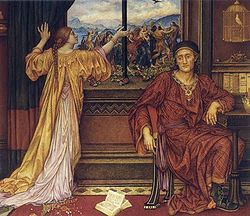
How Free Were American Women in the Gilded [C]age?

Bryan Caplan apparently missed the memo that nostalgia for the 18th and 19th centuries is, at best, an emotional appeal that connects with only a very narrow segment of the population. He’s taken it to a new low, however, by defending tooth and nail his theory that women possessed more freedom in 1880 than they do today, in 2010.

I was very relieved to see, however, that Caplan’s dive into the deep end of the libertarian crazy pool was a solo performance. Most libertarian-esque bloggers — in fact all the ones I’ve seen so far — have strongly pointed out that the idea women in the 1880’s lived in a libertarian utopia is nonsensical, ahistorical, and a really horrible argument for libertarianism. Because if libertarianism truly believes that women would be better off if they traded in the freedoms they enjoy now in favor of the “freedoms” they enjoyed in 1880, then libertarianism is too gruesome of an ideology to ever be worth defending.

I was struck by how deeply paternalistic Caplan’s argument was, and how much it echoes the same arguments that have been made against women’s rights for centuries. For instance, Caplan believes that the fact women were denied the vote is not indicative that women were any less free then they are today:

Yet the fact that women were unable to vote in defense of their “basic liberty rights” doesn’t show that American political system denied them these rights.

This is the same argument that was made against women’s suffrage for much of history. Why should women possibly need the right to vote? Their interests were adequately represented in politics already — after all, women have husbands and fathers looking out for their best interests, and to vote on their behalf. Their husbands and fathers love them, so of course they would not vote for politicians or legislation contrary to women’s interests.

Under Caplan’s theory, life in the gilded cage was a life of liberty — after all, so long as you don’t mind giving up your autonomy, and you are willing to accept legal and social restrictions that drastically narrowed the choices available to you, life in the 1880’s wasn’t so bad, now was it?

Sure, in 1880, personal opportunities were severely restricted — but that’s not a problem, says Caplan, because only a portion of it was directly mandated by legislation. And moreover, the tax rate was hardly objectionable at all — there wasn’t even a 16th Amendment. It’s utopia!

Of course, if I’m living in the 1880s, whether or not there is an income tax probably isn’t my foremost concern, as the odds are overwhelming that I won’t be working for pay, anyway. If I am, it will probably only be for a few years out of my life. In 1890, only 18 percent of women worked for pay. [PDF] So while there may not be a federal income tax, it’s not really that material to me, as I probably don’t have an income in the first place. And, once I get married, my odds of working go down to a meager 4.6%. Not to mention, once I’m married (and the odds are overwhelming that I will be), I also give up my right to own property, enter contracts, possess an independent legal existence, or not be raped by my spouse. Married or unmarried, I still can’t vote, can’t hold office, and I am forbidden from working in most occupations (and essentially all high paying ones). Technically, there’s still a chance I could’ve been a lawyer — thanks to good old Belva Ann Lockwood (GW Law Alum, ’73), one year previously, in 1879, I would have been allowed to practice in federal court. But given that there are about three female lawyers in all of America at this time, it’s a safe bet I won’t be one of them.

More likely, I would have been earning poverty-level wages as a seamstress, working 12 hour days — or more likely still, working in someone else’s house. In 1870, of the women who did work, 60% of the non-farm laborers were household servants. Although generally unmarried and not living with their families, they lived with their employer, and they did not have autonomous existences — being a household servant was deemed a way to provide a semi-respectable means for a woman to work, and yet still provide them with extensive supervision. I could possibly have been a nurse or teacher — in terms of “careers,” that was pretty much the extent of it — but even in 1890, only 2,500 women in all of the United States earned a bachelors degree.

So to recap, in the 1880s, the odds are better than 4 to 1 that I don’t work. If I do work, I have very few career options available to me, and the ones that I do have pay 1/3 to 1/5 of what men are paid for comparable work. I am probably working 12 hour days, and likely have to live with my employer. If I get married in a state with coverture, my effective tax rate becomes 100%, as I cannot own property, and any money I earn belongs to a male caretaker — a husband, or if I am younger, a father — who is in charge of my financial and legal affairs. On the up side, he probably does have my well-being in interest at heart. On the down side, he holds the absolute power to define what exactly my “well-being” is. If I disagree with his assessment of what is best for me, I have few legal options available to contradict it, and even fewer social options. Oh, and did I mention I don’t even have the right to vote?

Now, let’s fast forward to 2010. Suddenly, I possess the full set of legal rights that U.S. citizens currently enjoy. It’s not perfect, but the basics are mostly there. Oh, yeah, and women can vote, too. The income tax rate is high, that’s no fun, but on the other hand, I can actually make an income now, in just about any profession I want. Okay, true, I can’t make an income selling recreational drugs. But I can be a doctor, or an engineer, or a politician. And, sure, there are lots of petty and ill-considered economic regulations that interfere with any business plans I may have… But owning a business encumbered by federal legislation is still a lot better than not being able to own a business at all.

There shouldn’t be a question here about which is the better option. No rational actor would voluntarily choose the freedom available to women in 1880 over the freedom available to women in 2010. And for the majority of people, 2010 is still the far preferable choice, whether the average tax rate is 30% or 50% — or even higher still.

-Susan

Economics + History = … Science? A Brief Introduction to Cliometrics

I’m not sure if it says more about my lack of education or about cliometrics’ obscurity, but I first heard about the field of cliometrics from Eifelheim — a science fiction novel set in mid-14th century Germany, and based in part upon the unexpectedly entertaining synthesis of quantum physics and quantitative economic history. Or, rather, “cliogy,” as it’s called in Eifelheim. While I was reading the book, I took cliology to be a fictional branch of academia, something more or less a present-day version of Asimov’s psychohistory. After some snooping on wiki, however, I learned that the branch of history called cliometrics really does exist.

Cliometrics is “is the application of economic theory and quantitative techniques to describe and explain historical events.” The name is derived not from some scientificky sounding Latin terminology, but rather from Clio, the Greek muse of history. As a non-historian and non-economist, probably the most fascinating parts of it for me is largely the random historical-economic factoids — such as that in 1700 in Maryland, for a female indentured servant, one lash was worth about 38 cents, or about two days of labor.

Sadly, despite having snagged a Nobel in 1993, cliometrics is something of a has-been among academic disciplines. Too many articles on cliometrics are of the “What Has Cliometrics Achieved?” and “Reflections on the Cliometric Revolution” variety — it’s never a good sign for an academic field when the meta-commentary plays more prominent role than the regular kind does. The idea of making some sort of falsifiable, scientific study of history does seem appealing, but as cliometrics’ critics are quick to point out, the whole point about it being “history” means there’s too often not a complete set of data to work from, leaving researchers no choice to theorize in the gaps. The mere presence of numbers does not actually turn subjective analysis into an objective one.

Still — how can you not love a discipline that results in articles like “The Suitability of Domesday Book for Cliometric Analysis” and “An Economic History of Bastardy”?

-Susan

A Movement That Equates “Freedom From Slavery” with “Freedom to Possess Marijuana” Needs A New Marketing Strategy

Over at Reason, David Boaz has a sensible and thought-provoking article up that is worth checking out. The article is a reminder to libertarians that at the time of the Founding Fathers, all of humanity — save for the (partial) exception of white males — existed under conditions of tyranny, servitude, and deprivation of rights. ‘Freedom’ is not a word that could be used to describe the state of most of the people who lived then.

In light of this fact, Boaz makes the obvious point that the Libertarianesque message of “1776 was great! Let’s try and recreate those conditions today!” makes for a less than persuasive political slogan. Unfortunately, the commenters on the article react to this rather reasonable message with a mixture of disgust and outrage, going so far as to call Boaz a “communist” and a traitor to the libertarian cause.

The commenters as whole provide a rather excellent demonstration of why the libertarian party, more so than any other political group, is composed of young white guys who don’t like to go to church all that often.

I wonder when organized libertarian groups will realize there’s a reason that particular demographic is so grossly overrepresented among them. Maybe it’s because white men love freedom more than everyone else does. Yeah, that’s it. Libertarians are mostly white dudes because only white dudes truly desire liberty and freedom from oppressive governments. There couldn’t possibly be a more obvious explanation for the discrepancy, could there?

-Susan

brb, out of town.

There are exactly two conferences this year that I had any interest in attending: the American Society of International Law Annual Meeting and PAX East. This meant, predictably, that they would both be scheduled for the same weekend. Drat it. Gaming vs. international law, how’s a girl possibly supposed to decide?

But I guess it’s clear where my priorities lie. The ASIL Annual Meeting is conveniently located in Washington, DC — but I’m going up to PAX East instead, whoohoo. I still think the ASIL people should have thought this through and rescheduled the conference, so as not to cause any conflicts for me, but they declined to do so.

-Susan

Cuccinelli Birther – Health Care Conspiracy, Redux

Half of the predictions in my last post has come true. According to the Washington Post, Cuccinelli’s office confirms Virginia will sue over health care. As Cuccinelli noted, the only way he, as the AG, could get a chance to challenge the Obama birth certificate is “only if there is a conflict where we are suing the federal government for a law they’ve passed. So it’s possible.” Looks like he found his chance. According to the AG’s letter to Rep. Pelosi,

[T]o be validly enacted, the Senate bill would have to be accepted by the House in a form that is word-for-word identical. Should you employ the deem and pass tactic, you expose any act which may pass to yet another constitutional challenge. (Emphasis added.)

And just what, pray tell, are the ‘other’ challenges? That the Bill was not signed into law by a valid president?? You heard it here first, folks.

-Susan

Could the Virginia Attorney General Use Federal Health Care Reform to Bring the Obama Birth Certificate Controversy to Trial?

h/t Blogasm

Virginia Attorney General Ken Cuccinelli has been learning the hard way that prohibiting educational institutions from prohibiting discrimination against gays and lesbians is not a good way to make friends. He is also learning that it tends to lead to an unwanted increase in scrutiny from the public. Although Cuccinelli was not a name anyone not unusually dedicated to Virginia politics would know, that all changed after he told Virginia universities that they were not allowed to forbid discrimination based on sexual orientation.

As a result of this new-found notoriety, a blogger has turned up an audio clip in which Cuccinelli speaks about his possible “birther” beliefs:

Q What can we do about Obama and the birth certificate thing?

Cuccinelli: It will get tested in my view when someone… when he signs a law, and someone is convicted of violating it and one of their defenses will be it is not a law because someone qualified to be President didn’t sign it.

Q: Is that something you can do as Attorney General? Can you do that or something?

Cuccinelli: Well only if there is a conflict where we are suing the federal government for a law they’ve passed. So it’s possible.

Ouch. I bet today wasn’t a very fun day for the AG’s office.

For the record, no, I don’t actually think it’s even remotely likely that Cuccinelli intends to launch such a campaign challenging the validity of all post-Obama federal enactments. But clearly Cuccinelli has at least thought about the quest as an academic matter, so I’m allowed to do so as well.

And Cuccinelli’s right. He very much could institute a suit challenging President Obama’s qualifications for the presidency. And given his office, such a case would likely be taken a lot more seriously than anything instituted by lawyer-dentist Orly Taitz.

So assuming Cuccinelli did intend to argue in court that Obama is not the lawful president, where might he find such a possible conflict between Virginia and federal law to bring the case to court?

Well, conveniently, the Virginia state government recently enacted what is potentially the perfect vehicle for such a law suit: the Virginia health care nullification bill. (Of course, Cuccinelli would have to beat out the Florida Attorney General if he wanted to be first to challenge it in court.)

Nullification refers to the practice of states passing legislation that purports to contradict or nullify a federal enactment. Under the Supremacy Clause, the theory of nullification does not have much of a legal leg to stand on, though it remains as a fairly powerful form of symbolic protest by states against the federal government.

Most legislators know this, and do not seriously believe that a nullification law can do what it purports to. This is somewhat problematic in its own right — as a general rule, and ignoring my own personal opinions on the desirability of a federally enforced individual mandate, I strongly dislike the idea of states deliberately passing unconstitutional laws in order to make a political point.

Moreover, the last time Virginia engaged in a campaign of nullification was back in the 1950’s, when Virginia passed a series of laws resisting desegregation, using a number of different convoluted legislative strategies to try and avoid the force of federal law. These attempts were eventually struck down by federal courts.

Nevertheless, Virginia went ahead and became the first state to enact a bill that purports to negate any potential federal health care bill that would require citizens to purchase insurance. The bill

“[p]rovides a resident of the Commonwealth shall not be required to obtain or maintain a policy of individual insurance coverage except as required by a court or the Department of Social Services … The measure also states that no provision of Title 38.2 renders a resident liable for any penalty, assessment, fee, or fine as a result of his failure to procure or obtain health insurance coverage.”

If this bill were ever challenged in court, and the commerce clause challenges to it were swatted aside, Cuccinelli could always argue that the Virginia statute is lawful because the supposedly preempting Federal health care bill was not signed into law by a Constitutionally valid president.

So if Cuccinelli really wanted to go ahead and prove that Obama was some sort of Constitutional changeling, with his qualifications for the Presidency switched at birth, assuming a federal bill with a provision for individual mandates ever gets passed, he’ll have his chance.

-Susan

Gay Rights as Economic Policy

Whether or not sexual orientation can be made a protected class by Virginia agencies has been a very prominent news topic the past few weeks. When Governor McDonnell eliminated anti-discrimination protections for gays and lesbians, I doubt he expected a political quagmire to erupt. The heat on McDonnell only got worse last week when Attorney General Cuccinelli issued an opinion stating that Virginia’s public schools and colleges were prohibited from treating sexual orientation as a protected class.

Those opposing Governor McDonnell policies, however, now have a new argument to add to their list of reasons reversing McDonnell’s exclusion of gays and lesbians from state protection: economic policy.

Although gay rights have long been debated on the basis of morality, human rights, and equality, the current debate in Virginia has started to strike a rather pragmatic tone. While the Falls Church School Board reacted to Cuccinelli and McDonnell’s recent actions by defying the State government and adding gays and lesbians to its anti-discrimination policy, the Falls Church Chamber of Commerce has released a (draft) statement focusing on the fiscal considerations. If McDonnell’s policies stand, they argue,

“[M]any new and relocating businesses will choose to avoid Virginia because this posture on discrimination (by Cuccinelli-ed.) will have a profoundly chilling effect on prospective employees, contractors, vendors and customers… Surveys confirm overwhelmingly that those seeking employment in the high-tech sectors of the national economy, such as defines the predominant economic growth of Northern Virginia, hold very strongly to values of equal rights and justice for all persons.”

This is more than a hypothetical. Northrop Grumman, a California-based company, is planning to move to the East Coast — the mid-Atlantic, to be precise, and Virginia, Maryland, and D.C. are all courting the corporation. Last month, a Maryland representative wrote a letter to Northrop suggesting that Maryland would make a better new home for the company, as it does not have the exclusionary policies Virginia does.

Yesterday, however, a State Senate panel voted to add the following language to a bill designed to encourage Northrop Grumman to relocate to Virginia: “The Commonwealth of Virginia maintains an ecumenical atmosphere in its sexual orientation hiring policies in the private and public workforce.”

And passing this sort of legislation makes sense, from the perspective of a state seeking to vitalize the local economy. On first blush, whether or not Virginia provides protections to gays and lesbians wouldn’t seem to be an important business consideration, as State discrimination policies have no effect on a private corporation’s own internal regulations. However, it could make a very real difference in acompany’s operations, through affecting the signaling strategies the company hopes to adopt as well as the quality of the local talent it hopes to recruit. A state with an open minded and modern view on gays rights may well prove to be a better source of the dynamic, modern work force that corporations need in order to synergize and break the paradigm, or whatever else it is big corporations do.

A company could also help establish a “hip and vibrant” image by settling in a more socially progressive state in order to improve its corporate branding. For instance — and no offense intended to my home state’s lovely next door neighbor — but if Google were based in Alabama instead of Northern California, it would probably not have succeeded in attracting a lot of the young, college-educated talent that it does have.

Unfortunately, the gay-friendly language was eliminated from the Bill today, showing that Virginia is not quite ready to embrace gay rights as a fiscal policy initiative. This whole episode, however, does indicate the potential of using market forces as a way to promote human rights.

-Susan

“Untreated Chronic Pain Violates International Law”

When I saw the above headline, it struck me immediately as a possible contender for the Most Absurd Claim To A Customary Norm of International Law Yet. (Even one of my long time favorites, the ATS case involving the use of under-aged camel jockeys, had a better basis.) Although there is a very good case to be made that, under international law, states have a duty to avoid causing chronic pain in their citizens, there is hardly one whit of support for the idea that they are obliged to treat it.

It turns out the story is based upon a Human Rights Watch Report [PDF] that presents access to narcotics and relief from chronic pain as a human right enshrined under international law. Somewhat surprisingly, HRW starts not with a CIL argument, but claims that that the right to treatment of chronic pain is a treaty based obligation. For this they cite a single paragraph of the preamble of the Single Convention on Narcotic Drugs of 1961, which provides that the signatory states are

Concerned with the health and welfare of mankind, [and]

Recogniz[e] that the medical use of narcotic drugs continues to be indispensable for the relief of pain and suffering and that adequate provision must be made to ensure the availability of narcotic drugs for such purposes…

Unfortunately for the HRW report, however, the Convention was clearly not intended to address the availability of pain medication, but rather was entered into by states in an effort to curb cross-border drug trafficking. “Pain” or “suffering” is not mentioned again in the treaty’s text. Even giving it the most generous interpretation, all this language signifies is that the object and purpose of the treaty is to reduce world drug trafficking while not also prohibiting the legitimate medical use of narcotics.

The HRW report also undermines any claims that the Single Convention on Narcotic Drugs of 1961 is the basis of a customary norm that has developed since the treaty entered into force. According to the HRW report, “approximately 80 percent of the world population has either no or insufficient access to treatment for moderate to severe pain.” Given the total absence of any opinio juris on the subject, a mere 20% compliance rate does not a norm make.

I will not even address the report’s batpoop crazy claim that the well established and more-or-less globally accepted norm against cruel, inhumane, and degrading treatment applies to chronic pain, because “[a]s part of this positive obligation [against CITD], states have to take steps to protect people from unnecessary pain related to a health condition.” Seriously, HRW?

I suppose I could accept that the right to treatment of chronic pain qualifies as an aspirational norm, albeit a pretty weak one. The World Health Organization does list codeine and morphine on its Model List of Essential Medicines, a list signifying those drugs which states should endeavor to make available to all of their citizens that need them. But that’s about the most I can say for the study’s claims.

Of course, all of this is definitely not to suggest that the report does not in fact identify a genuine problem. As HRW notes, “Burkina Faso estimates that 8 people need morphine per year. Gabon estimates 14. The Gambia, 31.” Hard to argue with a need for education and reform there. But by cloaking every worthy policy suggestion in a nonsensical guise of “international law,” HRW is actually undermining the rule of international law on the global plane.

-Susan

Samantar v. Yousuf…

… was anticlimactic. Although we succeeded in running into quite a few GW Law people, we did not succeed in getting seated. (I may have succeeded in getting frostbite, however.)

Poor Michael was #52 in line, and they only let a grand total of 50 in. So he has the distinction of being the second loser. Although the first loser had it worst — it was the second time in which he had been the first person to not get seated at a hearing. I will accept some responsibility for us missing the hearing, as I had the bright idea of changing our meet up time from 6am to 7am. Poor form, I know.

The guards stationed in front of the steps informed us that it had been less crowded for friggin’ McDonald than it was for Samantar, which is ridiculous, because it was rainy and cold and Samantar does not involve guns.

Also I still maintain that Michael lost his spot to Harold Koh, who came waltzing across the plaza with his entourage about five minutes before the oral argument started. Excuse me, sir, I do not believe that the U.S. is a party to this case, so you can just go wait in line with the rest of us, thank you very much.

Anyway, as a very poor consolation prize, we were at least in the first group for the silly 3-5 minute viewing exercise they have for tourists. Didn’t really see or hear much, though. The transcripts are up for the case now, but I think at this point I will have to put off reading it until tomorrow. Will probably have more thoughts then.

But I swear, if I ever find out that that class of 8-10 year olds that was let in got seated and we didn’t, I will lose all faith in American democracy.

-Susan