For Reported Civilian Fatalities, 7 and 21 are the Magic Numbers, Not 30

Security Crank and Moon of Alabama have has posts up recently noting how strangely often reports of U.S and NATO military actions claim that, as a result of collateral damage, precisely 30 civilians were killed. As Security Crank writes,

[T]he much more important point remains: how could we possibly have any idea how the war is going, here or anywhere else, when the bad guys seem only to die in groups of 30? The sheer ubiquity of that number in fatality and casualty counts is astounding, to the point where I don’t even pay attention to a story anymore when they use that magic number 30.

This L.A. Times Article, as noted by a post on the 30 phenomenon over on AlterNet, suggests that the magic number 30 could be a result of Pentagon protocols on “collateral damage estimates”:

We don’t know much about how it works, but in 2007, Marc Garlasco, the Pentagon’s former chief of high-value targeting, offered a glimpse when he told Salon magazine that in 2003, “the magic number was 30.” That meant that if an attack was anticipated to kill more than 30 civilians, it needed the explicit approval of then-Defense Secretary Donald H. Rumsfeld or President George W. Bush. If the expected civilian death toll was less than 30, the strike could be OKd by the legal and military commanders on the ground.

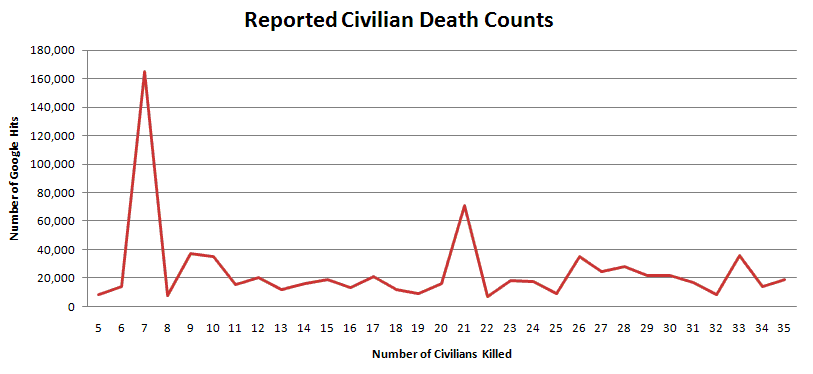
This all seems fairly telling, but given how many civilian deaths there are in the conflicts in Iraq, Afghanistan, and elsewhere, for any given number you choose, it’s fairly easy to pick out a list of articles all citing to that number of civilian casualties. So I did a very unscientific ’empirical’ test: the Google Hit Count. Using the phrase [“n civilians” + killed + US], I checked the number of results for civilian deaths from 5 – 30. Below 5, and the results don’t work as well because it seemed reporters more often used two or three instead of 2 or 3, and above 35, the numbers are not interesting and pretty steadily decrease or remain at low counts thereafter.

(Click on graph see full image)

Now, this does provide a little support for the idea that 30 is the magic number. If it is true that < 30 deaths requires less paper work, we would expect to see that, for close cases, commanders would have an incentive to determine that the number of civilian deaths is at or just under 30. Note that at 31 and 32 civilian deaths, there is a noticeable drop off, and that the number of deaths in the 25-30 categories is a bit higher than the usual range. This is consistent with the idea that commanders are quietly moving attacks with 31 or 32 deaths into the 30 or below reports. However, once there are 33 deaths, they don’t bother with trying to fudge it.

Still, any effect is a small one. The real question here is what on earth is going on with the number 7? And, to a lesser extent, 21? I know this survey is far from perfect, but the google returns for 7 deaths are so far out from the rest of the data set that it is hard to believe it is merely a random fluke. Looking at the Google results provides no obvious clues to explain the difference.

The number 21 also has an oddly high number of reports. This is a bit counter-intuitive, as if there was an attempt by the PR machine to make the numbers more appealing, I would guess that they would aim for 18 or 19 instead — you know, the old salesman’s trick of setting the price at $19.99.

I wish I had something clever to say here about what might be going on, but I don’t. Still, if we are going to be questioning the accuracy of military civilian death counts, the alleged ubiquity of the number 30 may be a red herring — 7 and 21 seem like much more promising anamolies to investigate.

-Susan

I Hear Dusseldorf, Japan is a Nice Place to Visit This Time of Year

Earlier today while I was in the car, I was listening to c-span radio, half-paying attention, and they were airing some debates in the Senate on health care reform. Someone — it was a senator, I am reasonably sure — was discussing pharmaceutical regulations and foreign pharmaceutical manufacturers. So he was droning on about “pharmaceuticals made in Paris France, pharmaceuticals made in Brussels, Belgium,” etc., etc., etc. He named about five or six different nations.

And then, while finishing up his haranguing, he declared, “And also pharmaceuticals made in Dusseldorf, Japan.”

Which, if I had to guess, was the most hilarious thing said on c-span all day, if not all week. (It’s not stiff competition.) And yeah, I actually cracked up laughing. But now I want to know who the hell it was that said that, and the internet is no help at all. I guess it’s possible I aurally hallucinated it? Don’t think so, though. I just want to figure out which senator it is that somehow thinks Dusseldorf sounds like it could possibly be located in Japan.

-Susan

The Alien Tort Statute Under the Obama Administration: Executive Suggestions vs. Explicit Requests

On December 1st, the United States Government filed a Statement of Interest (SOI) [PDF] in defendants’ appeal from In re S. African Apartheid Litig., 617 F. Supp. 2d 228 (S.D.N.Y. 2009) to the Second Circuit, seeking reversal of the district court’s denial of the defendants’ motion to dismiss. The U.S. brief, in a turn around from its previously voiced opinions on the case, argues that the Second Circuit should decline to find jurisdiction and allow the litigation to continue in the district court.

Background on the case: The South Africa Apartheid Litigation — a combination of the Khulumani and Ntsebeza cases — has been winding its slowly through the courts for a few years, bouncing its way back and forth between the District Court and the Second Circuit. Plaintiffs have alleged that several major multinational corps are guilty of “aiding and abetting” the apartheid South African government, and eight years ago the plaintiffs brought suit under the Alien Tort Statute. After going back in the district court on remand, the defendants filed for dismissal, inter alia, on comity. They lost, and sought interlocutory appeal of the dismissal, with a hearing in the case set for January 6, 2010.

A major issue, however, is whether the Second Circuit can even hear the appeal of the dismissal. For interlocutory appeals, in addition to two other factors not at issue here, a decision by the district court must be effectively unreviewable on appeal from a final judgment.

The U.S. Government’s SOI asks the court of appeals to find it has no jurisdiction over the case because the U.S. has not explicitly asked for its dismissal. Therefore, according to the U.S., requiring defendants to wait until a final order in the case is given does not impair any of the U.S.’s interests (not the defendants’ interests), and accordingly jurisdiction for interlocutory appeal is not present. As stated in the government’s brief,

when a defendant seeks appellate review of a district court’s order denying a motion to dismiss a suit predicated on the adverse consequences on the Nation’s foreign relations, the court of appeals has jurisdiction under the collateral order doctrine only if the district court denied defendant’s motion despite the fact that the Executive Branch explicitly sought dismissal of the suit on that ground. The requirement of an explicit request for dismissal on foreign policy grounds by the Executive Branch is, in our view, critical.

The U.S.’s implicit endorsement of continuing the apartheid litigation was apparently precipitated by a letter recently sent by the South African Justice Minister [PDF]. Previously, South Africa has strenuously objected to having South African apartheid-era torts tried in American courts. However, in September, 2009, Minister Radebe wrote to the district court, unsolicited, stating that “[t]he Government of the Republic of South Africa, having considered carefully the judgement of the United States District Court, Southern District of New York is now of the view that this Court is an appropriate forum to hear the remaining claims of aiding and abetting in violation of international law.” Shortly thereafter, the U.S. filed its own SOI in which it evinced no objections to continuing the case. The impression given is that, once South Africa dropped its objections, all of the U.S.’s objections immediately evaporated as well — and that so long as the foreign sovereign involved is happy, the U.S. has no concerns of its own.

But something more is going on here. Despite the SOI’s careful language, which stresses repeatedly that the U.S. never “explicitly request[ed]” a dismissal, and its framing of earlier U.S. involvement as merely an attempt to express “concerns” about procedural scope, this is in reality a radical shift from the U.S.’s previous stance under the Bush Administration. Let’s take a look at what the U.S. had to say back in 2007:

“[i]t would be extraordinary to give U.S. law an extraterritorial effect in [these] circumstances to regulate [the] conduct of a foreign state over its citizens, and all the more so for a federal court to do so as a matter of common law-making power. Yet plaintiffs would have this Court do exactly that by rendering private defendants liable for the sovereign acts of the apartheid government in South Africa.” Brief of the United States of America Amicus Curiae Supporting Defendant-Appellees, at 21, Khulumani v. Barclay Nat. Bank, Ltd., 504 F.3d 245 (2d Cir. 2007).

This is not a statement given by a government that merely has “concerns” that can be easily resolved with a few tweaks. And according to Jack Goldsmith and Curtis Bradley, “This should have been enough for dismissal.”

However, because Obama inherited this case from Bush, he — or rather, his legal people — are trying to impose their new policy stances in a manner that is not blatantly inconsistent with previous government filings. So in the U.S. Government’s Dec. 2009 SOI, they are forced into using rather cagey language: “[t]he requirement of an explicit request for dismissal on foreign policy grounds by the Executive Branch is, in our view, critical.” Because Bush’s legal team forgot to preface its filings with the legal equivalent of ‘mother may I,’ the U.S. Government can now argue that despite all of their earlier protests and disagreements with allowing the litigation to continue, the government never actually wanted the case to be dismissed. A few years back in Sosa, the Supreme Court stated “there is a strong argument that the federal courts should give serious weight to the Executive Branch’s view of the case’s impact on foreign policy.” This statement still holds true, save that Obama is clarifying now that “the Executive Branch’s view” means only official requests — in other words, executive suggestions must now be phrased as executive demands.

Essentially, under the legal analysis offered by the government’s SOI, any opinions given by the U.S. Government in an ATS case will be treated as just another voice in the crowd (if perhaps a particularly loud one), unless and until the U.S. tells the Court, “Hey, hold up now, this time we’re actually being serious! We actually want it to be dismissed now! Consider this an explicit request!” If the U.S. opposes an ATS case but merely “reference[s] the adverse foreign policy consequences of recognizing plaintiffs’ claims,” [SOI, p. 10, referring to previous appellate briefs filed by the U.S. in Khulumani], then, according to the government’s filing, the U.S. is just making a legal argument acknowledging that foreign policy concerns exist, it is not actually invoking an Executive Branch smack down.

Unfortunately for Bush, he didn’t know about this new safe word. So instead of making an Official Executive Suggestion That the Court Stop Its Shenanigans, like he thought he was doing, Bush just gave the court a heads up on his personal legal opinion.

As for those wondering why the government’s opinion on the South African apartheid litigation has changed under Obama, well, remember — the State Department’s new legal advisor is Harold Koh, and it seems very likely that the U.S. Government’s brief was partially (or more) a result of his influence. Koh, prior to his current post, had joined a brief in the Khulumani case arguing for a broad aiding-and-abetting standard for corporate liability for complicity in foreign human rights abuses. And, as everyone knows, Koh’s also a Godless, U.N.-worshipping America-hater. With him in charge, the Obama Administration is getting ready to throw an Alien Tort Statute party, and all corporate human rights violators are invited. Until Obama explicitly says they’re not.

-Susan

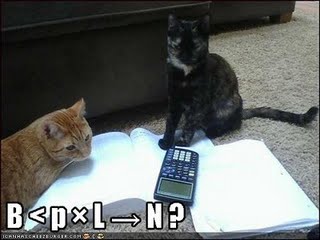
Trivia Fact: This Blog is the #1 Result for International Law Lolcats

The past few days have seen a noticeable uptick in the number of google searches that direct to here for variations of either “law lolcats” or “alien tort statute hypos.”

Ahhh, that sounds like law school exam time, to me. Procrastination + dubious last minute study methods are a common MO.

Hint to all law students: If your prof happens to have a blog, it doesn’t hurt to give it a quick skim to get an idea of what sort of odd legal questions seem to catch their fancy, and thus are the sort of things they are drawn to basing fact patterns around. I swear to god this can actually pay off. Heck, checking Volokh can’t hurt either — I once inadvertently helped my roommate out by talking to her about a Volokh blog post on copyright and jazz music that turned up on her Copyright Law exam a few days later.

-Susan

Amanda Knox’s Conviction and What Not To Do About It

Some of the comments on the last post about Amanda Knox’s murder conviction made me want to clarify a few points.

First, the Italian court system is sometimes troubling, true, but the deeply problematic criminal justice system in Perugia should not be generalized to all of Italy. Perugia’s head prosecutor is not a good person, and this is not the first time the Perugian justice system has refused to let the truth get in the way of a good story. But by no means is Knox’s situation the Italian norm. It’s a crazy and unfortunate outlier.

The court system is not the only problem, either; even more pervasive are the biased and sensationalist media accounts. Perhaps even more so than Mignini, the media’s tabloid-style rumor mongering is in part responsible for Knox’s conviction, by convincing the public that baseless stories are grounded in some sort of proof, rather than sprung whole cloth out of peoples’ imaginations.

Second, staging an American boycott of Italian products or getting President Obama directly involved is the surest way to guarantee Amanda never sees the light of day again. Nations are — rightfully — extremely allergic to the idea of foreign entities interfering with their court system. Just think about how Texas and the rest of America flips their shit when the idea of the ICC is brought up, or when trivial things like multilateral treaties get in the way of us executing foreign murderers. Or about how we react to little issues like, say, LaGrand, Medellín, Avena?

If Italy thinks the U.S. government is trying to bully them into letting the vixen-murderess free, they will circle the wagons. The Italian court system will be pressured to uphold the conviction on principle, so as to not be seen as weak and catering to a foreign superpower. When I said “it’s time for the state department to bring out the big guns,” I was thinking more along the lines of behind the scenes diplomatic efforts that the rest of us never hear a word about. That way, Italy’s public officials will be able to act without taking a massive hit to their popularity, as would certainly occur if the fact the U.S. had asked them for help were publicized. And, I do think the U.S. Government has been exactly right so far in refusing to even acknowledge the case’s existence. Before Knox’s conviction, by far the best way that the U.S. could help her was by refusing to lift a finger in her defense.

If things get really desperate — and this would, unfortunately, be years down the line — I wouldn’t be against turning to multilateral international institutions for relief. It would deplete some of our foreign policy capital to be sure, but there are worse things to spend it on than freeing an innocent woman wrongfully convicted in an allied country.

Plus, you know, there’s that whole Italian conviction of 22 American CIA agents last month we have to deal with, too. We’re also going to have to sort out that mess. Unfortunately for Amanda, she’s going to be of secondary concern, if that, for the U.S. Government, and I doubt they’re going to offer Amanda too much assistance if it’s going to hinder other national security concerns.

Anyway, there is hope yet, and Italy’s domestic criminal procedures absolutely must be exhausted before any other action is contemplated. On appeal, the current bunch of Perugian officials will not be involved, which gives Knox a fighting chance.

-Susan

Injustice in Perugia: The Fraudulent Conviction of Amanda Knox and Raffaele Sollecito

My deepest sympathies go out to Amanda Knox and Raffaele Sollecito, as well as their families.

I don’t think I believed they would actually be convicted; I knew it was a possibility, given how shockingly corrupt the prosecution has been, but I was still stunned when I saw the guilty verdict.

The lead prosecutor in Knox’s case is Giuliano Mignini, a paranoid conspiracy theorist who has never displayed any concern for the truth of his allegations. Amanda Knox’s conviction makes for a great story — crazed American sexual deviant rapes and murders her roommate! News at 11! Also she does yoga, the evil little slut!– and that was enough to convince him of her guilt.

This article a few days ago in the New York Times Opinionater sums it up:

In closing arguments, Knox was described as a “Luciferina” and “a dirty-minded she-devil.” Preposterous, made-up sexual motives were ascribed to her. One prosecutor speculated before the jury what Knox may have said to Meredith Kercher before, he claimed, forcing an orgy that resulted in her death:

“You are always behaving like a little saint. Now we will show you. Now we will make you have sex.”

Nobody alleges that Knox said this to Kercher. But prosecutors asked the jury to imagine her saying such a thing.

What century is this? Didn’t Joan of Arc, the Inquisition and our own American Salem witch trials teach civilized nations a thing or two about contrived sexual hysteria with a devil twist?

The fact Amanda Knox is an American has undoubtedly played a role in her prosecution and conviction, as well; the jury was clearly influenced by the national identities involved, and at the reading of the verdict, six of the eight jurors were wearing red, white, and green sashes, the color of Italy’s flag.

The man who killed Meredith Kercher is in jail; Rudy Guede was fairly blatantly guilty from the beginning, with plenty of physical evidence plus his own confession to prove it. There is no coherent theory that can explain how he, Amanda, and Raffaele could have all been involved, even ignoring the fact there is zero believable evidence to show either Amanda or Raffaele alone were involved.

I suppose things could go well for them on appeal, but I don’t hold much hope for that. It’s time for the State Department to bring out the big guns, and do what they can to bring Amanda Knox home.

-Susan

Footnote of the Day: The Apple <3 Sagan Edition

72 See Sagan v. Apple Computer, Inc., 874 F. Supp. 1072 (C.D. Cal. 1994) (Apple had given a development project the internal name “Carl Sagan,” but when this fact was publicized Sagan demanded his name not be used. Apple technicians changed the project’s code name to “Butt-Head Astronomer.”)

Edit: After Carl Sagan sued Apple for the “Butt-Head Astronomer” name (a suit Apple eventually won on First Amendment grounds), Apple’s lawyers made the programmers change the codename. They grudgingly did so, re-naming the project LAW — short for “Lawyers Are Wimps.”

-Susan

Congrats, Rwanda, on Being Landmine Free! Plus: HeroRATS.

Rwanda has become the first country to become landmine-free. Under the Ottawa Convention, this mean that not only as Rwanda detected and removed all landmines placed on its territory, but all its stockpiled mines. Impressively, under the treaty, Rwanda had a full year more to achieve landmine-free status, so, in a somewhat rare event under international law, they’re ahead of schedule on compliance.

Largely because of security issues related to South Korea and the DMZ, the U.S. still has not acceded to the convention.

In Rwanda, mine detection dogs were used to sweep the country side, and to identify and secure any mine found. Dogs aren’t the only option, however. One of my favorite international charities, APOPO, is pioneering the use of heartbreakingly adorable Gambian pouched rats as landmine detectors. The HeroRATS have a lot of advantages over dogs when it comes to mine detection, particularly in developing countries. They are cheaper than dogs, quicker to train and reach maturity, easy to motivate, and — perhaps most importantly — are light enough where they will not trigger the landmines themselves. Currently, the rats are used for demining efforts in Tanzania and Mozambique.

HeroRATS are a versatile tool for international development — they can also be trained to detect tuberculosis infections. Although as accurate as humans in detecting TB, they are about a hundred times faster:

HeroRATS offer a local solution to the TB epidemic. A rat can evaluate 40 samples in 10 minutes, equal to what a skilled lab technician, using microscopy, will do in two days. Without requiring sophisticated instruments, this method is non invasive and can handle a high volume of samples, all very important factors in a pro-active screening approach.

-Susan