
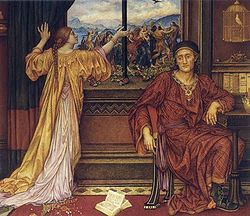
How Free Were American Women in the Gilded [C]age?

Bryan Caplan apparently missed the memo that nostalgia for the 18th and 19th centuries is, at best, an emotional appeal that connects with only a very narrow segment of the population. He’s taken it to a new low, however, by defending tooth and nail his theory that women possessed more freedom in 1880 than they do today, in 2010.

I was very relieved to see, however, that Caplan’s dive into the deep end of the libertarian crazy pool was a solo performance. Most libertarian-esque bloggers — in fact all the ones I’ve seen so far — have strongly pointed out that the idea women in the 1880’s lived in a libertarian utopia is nonsensical, ahistorical, and a really horrible argument for libertarianism. Because if libertarianism truly believes that women would be better off if they traded in the freedoms they enjoy now in favor of the “freedoms” they enjoyed in 1880, then libertarianism is too gruesome of an ideology to ever be worth defending.

I was struck by how deeply paternalistic Caplan’s argument was, and how much it echoes the same arguments that have been made against women’s rights for centuries. For instance, Caplan believes that the fact women were denied the vote is not indicative that women were any less free then they are today:

Yet the fact that women were unable to vote in defense of their “basic liberty rights” doesn’t show that American political system denied them these rights.

This is the same argument that was made against women’s suffrage for much of history. Why should women possibly need the right to vote? Their interests were adequately represented in politics already — after all, women have husbands and fathers looking out for their best interests, and to vote on their behalf. Their husbands and fathers love them, so of course they would not vote for politicians or legislation contrary to women’s interests.

Under Caplan’s theory, life in the gilded cage was a life of liberty — after all, so long as you don’t mind giving up your autonomy, and you are willing to accept legal and social restrictions that drastically narrowed the choices available to you, life in the 1880’s wasn’t so bad, now was it?

Sure, in 1880, personal opportunities were severely restricted — but that’s not a problem, says Caplan, because only a portion of it was directly mandated by legislation. And moreover, the tax rate was hardly objectionable at all — there wasn’t even a 16th Amendment. It’s utopia!

Of course, if I’m living in the 1880s, whether or not there is an income tax probably isn’t my foremost concern, as the odds are overwhelming that I won’t be working for pay, anyway. If I am, it will probably only be for a few years out of my life. In 1890, only 18 percent of women worked for pay. [PDF] So while there may not be a federal income tax, it’s not really that material to me, as I probably don’t have an income in the first place. And, once I get married, my odds of working go down to a meager 4.6%. Not to mention, once I’m married (and the odds are overwhelming that I will be), I also give up my right to own property, enter contracts, possess an independent legal existence, or not be raped by my spouse. Married or unmarried, I still can’t vote, can’t hold office, and I am forbidden from working in most occupations (and essentially all high paying ones). Technically, there’s still a chance I could’ve been a lawyer — thanks to good old Belva Ann Lockwood (GW Law Alum, ’73), one year previously, in 1879, I would have been allowed to practice in federal court. But given that there are about three female lawyers in all of America at this time, it’s a safe bet I won’t be one of them.

More likely, I would have been earning poverty-level wages as a seamstress, working 12 hour days — or more likely still, working in someone else’s house. In 1870, of the women who did work, 60% of the non-farm laborers were household servants. Although generally unmarried and not living with their families, they lived with their employer, and they did not have autonomous existences — being a household servant was deemed a way to provide a semi-respectable means for a woman to work, and yet still provide them with extensive supervision. I could possibly have been a nurse or teacher — in terms of “careers,” that was pretty much the extent of it — but even in 1890, only 2,500 women in all of the United States earned a bachelors degree.

So to recap, in the 1880s, the odds are better than 4 to 1 that I don’t work. If I do work, I have very few career options available to me, and the ones that I do have pay 1/3 to 1/5 of what men are paid for comparable work. I am probably working 12 hour days, and likely have to live with my employer. If I get married in a state with coverture, my effective tax rate becomes 100%, as I cannot own property, and any money I earn belongs to a male caretaker — a husband, or if I am younger, a father — who is in charge of my financial and legal affairs. On the up side, he probably does have my well-being in interest at heart. On the down side, he holds the absolute power to define what exactly my “well-being” is. If I disagree with his assessment of what is best for me, I have few legal options available to contradict it, and even fewer social options. Oh, and did I mention I don’t even have the right to vote?

Now, let’s fast forward to 2010. Suddenly, I possess the full set of legal rights that U.S. citizens currently enjoy. It’s not perfect, but the basics are mostly there. Oh, yeah, and women can vote, too. The income tax rate is high, that’s no fun, but on the other hand, I can actually make an income now, in just about any profession I want. Okay, true, I can’t make an income selling recreational drugs. But I can be a doctor, or an engineer, or a politician. And, sure, there are lots of petty and ill-considered economic regulations that interfere with any business plans I may have… But owning a business encumbered by federal legislation is still a lot better than not being able to own a business at all.

There shouldn’t be a question here about which is the better option. No rational actor would voluntarily choose the freedom available to women in 1880 over the freedom available to women in 2010. And for the majority of people, 2010 is still the far preferable choice, whether the average tax rate is 30% or 50% — or even higher still.

-Susan

Economics + History = … Science? A Brief Introduction to Cliometrics

I’m not sure if it says more about my lack of education or about cliometrics’ obscurity, but I first heard about the field of cliometrics from Eifelheim — a science fiction novel set in mid-14th century Germany, and based in part upon the unexpectedly entertaining synthesis of quantum physics and quantitative economic history. Or, rather, “cliogy,” as it’s called in Eifelheim. While I was reading the book, I took cliology to be a fictional branch of academia, something more or less a present-day version of Asimov’s psychohistory. After some snooping on wiki, however, I learned that the branch of history called cliometrics really does exist.

Cliometrics is “is the application of economic theory and quantitative techniques to describe and explain historical events.” The name is derived not from some scientificky sounding Latin terminology, but rather from Clio, the Greek muse of history. As a non-historian and non-economist, probably the most fascinating parts of it for me is largely the random historical-economic factoids — such as that in 1700 in Maryland, for a female indentured servant, one lash was worth about 38 cents, or about two days of labor.

Sadly, despite having snagged a Nobel in 1993, cliometrics is something of a has-been among academic disciplines. Too many articles on cliometrics are of the “What Has Cliometrics Achieved?” and “Reflections on the Cliometric Revolution” variety — it’s never a good sign for an academic field when the meta-commentary plays more prominent role than the regular kind does. The idea of making some sort of falsifiable, scientific study of history does seem appealing, but as cliometrics’ critics are quick to point out, the whole point about it being “history” means there’s too often not a complete set of data to work from, leaving researchers no choice to theorize in the gaps. The mere presence of numbers does not actually turn subjective analysis into an objective one.

Still — how can you not love a discipline that results in articles like “The Suitability of Domesday Book for Cliometric Analysis” and “An Economic History of Bastardy”?

-Susan

A Movement That Equates “Freedom From Slavery” with “Freedom to Possess Marijuana” Needs A New Marketing Strategy

Over at Reason, David Boaz has a sensible and thought-provoking article up that is worth checking out. The article is a reminder to libertarians that at the time of the Founding Fathers, all of humanity — save for the (partial) exception of white males — existed under conditions of tyranny, servitude, and deprivation of rights. ‘Freedom’ is not a word that could be used to describe the state of most of the people who lived then.

In light of this fact, Boaz makes the obvious point that the Libertarianesque message of “1776 was great! Let’s try and recreate those conditions today!” makes for a less than persuasive political slogan. Unfortunately, the commenters on the article react to this rather reasonable message with a mixture of disgust and outrage, going so far as to call Boaz a “communist” and a traitor to the libertarian cause.

The commenters as whole provide a rather excellent demonstration of why the libertarian party, more so than any other political group, is composed of young white guys who don’t like to go to church all that often.

I wonder when organized libertarian groups will realize there’s a reason that particular demographic is so grossly overrepresented among them. Maybe it’s because white men love freedom more than everyone else does. Yeah, that’s it. Libertarians are mostly white dudes because only white dudes truly desire liberty and freedom from oppressive governments. There couldn’t possibly be a more obvious explanation for the discrepancy, could there?

-Susan

brb, out of town.

There are exactly two conferences this year that I had any interest in attending: the American Society of International Law Annual Meeting and PAX East. This meant, predictably, that they would both be scheduled for the same weekend. Drat it. Gaming vs. international law, how’s a girl possibly supposed to decide?

But I guess it’s clear where my priorities lie. The ASIL Annual Meeting is conveniently located in Washington, DC — but I’m going up to PAX East instead, whoohoo. I still think the ASIL people should have thought this through and rescheduled the conference, so as not to cause any conflicts for me, but they declined to do so.

-Susan

Cuccinelli Birther – Health Care Conspiracy, Redux

Half of the predictions in my last post has come true. According to the Washington Post, Cuccinelli’s office confirms Virginia will sue over health care. As Cuccinelli noted, the only way he, as the AG, could get a chance to challenge the Obama birth certificate is “only if there is a conflict where we are suing the federal government for a law they’ve passed. So it’s possible.” Looks like he found his chance. According to the AG’s letter to Rep. Pelosi,

[T]o be validly enacted, the Senate bill would have to be accepted by the House in a form that is word-for-word identical. Should you employ the deem and pass tactic, you expose any act which may pass to yet another constitutional challenge. (Emphasis added.)

And just what, pray tell, are the ‘other’ challenges? That the Bill was not signed into law by a valid president?? You heard it here first, folks.

-Susan

Could the Virginia Attorney General Use Federal Health Care Reform to Bring the Obama Birth Certificate Controversy to Trial?

h/t Blogasm

Virginia Attorney General Ken Cuccinelli has been learning the hard way that prohibiting educational institutions from prohibiting discrimination against gays and lesbians is not a good way to make friends. He is also learning that it tends to lead to an unwanted increase in scrutiny from the public. Although Cuccinelli was not a name anyone not unusually dedicated to Virginia politics would know, that all changed after he told Virginia universities that they were not allowed to forbid discrimination based on sexual orientation.

As a result of this new-found notoriety, a blogger has turned up an audio clip in which Cuccinelli speaks about his possible “birther” beliefs:

Q What can we do about Obama and the birth certificate thing?

Cuccinelli: It will get tested in my view when someone… when he signs a law, and someone is convicted of violating it and one of their defenses will be it is not a law because someone qualified to be President didn’t sign it.

Q: Is that something you can do as Attorney General? Can you do that or something?

Cuccinelli: Well only if there is a conflict where we are suing the federal government for a law they’ve passed. So it’s possible.

Ouch. I bet today wasn’t a very fun day for the AG’s office.

For the record, no, I don’t actually think it’s even remotely likely that Cuccinelli intends to launch such a campaign challenging the validity of all post-Obama federal enactments. But clearly Cuccinelli has at least thought about the quest as an academic matter, so I’m allowed to do so as well.

And Cuccinelli’s right. He very much could institute a suit challenging President Obama’s qualifications for the presidency. And given his office, such a case would likely be taken a lot more seriously than anything instituted by lawyer-dentist Orly Taitz.

So assuming Cuccinelli did intend to argue in court that Obama is not the lawful president, where might he find such a possible conflict between Virginia and federal law to bring the case to court?

Well, conveniently, the Virginia state government recently enacted what is potentially the perfect vehicle for such a law suit: the Virginia health care nullification bill. (Of course, Cuccinelli would have to beat out the Florida Attorney General if he wanted to be first to challenge it in court.)

Nullification refers to the practice of states passing legislation that purports to contradict or nullify a federal enactment. Under the Supremacy Clause, the theory of nullification does not have much of a legal leg to stand on, though it remains as a fairly powerful form of symbolic protest by states against the federal government.

Most legislators know this, and do not seriously believe that a nullification law can do what it purports to. This is somewhat problematic in its own right — as a general rule, and ignoring my own personal opinions on the desirability of a federally enforced individual mandate, I strongly dislike the idea of states deliberately passing unconstitutional laws in order to make a political point.

Moreover, the last time Virginia engaged in a campaign of nullification was back in the 1950’s, when Virginia passed a series of laws resisting desegregation, using a number of different convoluted legislative strategies to try and avoid the force of federal law. These attempts were eventually struck down by federal courts.

Nevertheless, Virginia went ahead and became the first state to enact a bill that purports to negate any potential federal health care bill that would require citizens to purchase insurance. The bill

“[p]rovides a resident of the Commonwealth shall not be required to obtain or maintain a policy of individual insurance coverage except as required by a court or the Department of Social Services … The measure also states that no provision of Title 38.2 renders a resident liable for any penalty, assessment, fee, or fine as a result of his failure to procure or obtain health insurance coverage.”

If this bill were ever challenged in court, and the commerce clause challenges to it were swatted aside, Cuccinelli could always argue that the Virginia statute is lawful because the supposedly preempting Federal health care bill was not signed into law by a Constitutionally valid president.

So if Cuccinelli really wanted to go ahead and prove that Obama was some sort of Constitutional changeling, with his qualifications for the Presidency switched at birth, assuming a federal bill with a provision for individual mandates ever gets passed, he’ll have his chance.

-Susan

And the Winner For Best Advertisement For Legal Services Goes To…

Cooney & Conway, for a spot advertising their mesothelioma claims practice. It features an older woman, who speaks into the camera with a tone of utmost sincerity, her eyes practically welling up with heartfelt gratitude, as she describes the attorneys that helped get her a settlement:

“They were more than lawyers… They were human beings.”

-Susan

Man as the Default, Woman as the Other: Fox News’ Ridiculously Pointless Sexism

Although I would be curious to see the results of an empirical look at the question, my own experience has been that Fox News is the most horrible of all major media organizations when it comes to a very old, very tired and insidious version of sexism: the concept of male as the default, and female as the “other.”

Whenever I watch Fox, I am constantly cringing at their coverage of every day news events. “In Texas, a woman motorist was involved in a collision…” “At the CDC, a female research scientist working on contagious diseases reports that…” “A conviction for embezzlement was handed down today for a female trust fund manager…”

Sometimes — sometimes — these characterizations are not all that offensive or nerve-grating, particularly where the gender ratio of the descriptive noun being used is very large. For instance, describing someone as a “female suicide bomber” might be appropriate where, in the context of the news blurb, the gender is unusual and there is no other way to convey that information in a brief sentence. And, of course, where the person’s gender is actually relevant to the story, providing that information is acceptable and expected, even when done in the clumsy “female [noun]” structure.

But, generally, Fox News simply attaches “woman” or “female” in every instance that a noun happens to refer to someone with an XX chromosome. Because male is the default; male is the normal, the average, the expected. In Fox News’ world, people are male until indicated otherwise.

In think in particular it is Fox’s constant use of “woman motorist” that drives me the most batty. By definition, easily half of motorists are women, and, equally by definition, “motorist” is completely gender neutral. Just in terms of writing style, it is offensively clumsy and jarring to the ear — why on earth use that descriptor when in the next sentence you’re going to clarify any confusion anyway by referring to her with a pronoun anyway?

Today, while on Fox News’ page to skim another article, I noticed a link to the day’s most popular stories, and it included the following headline:

Report: Female Trainer Killed at SeaWorld’s Shamu Stadium.

The inclusion of “female” in the headline is, on the scale of things, a relatively minor offense. But it is only because habitual gender essentialism and female othering is so pervasive in the media that such a headline can exist. Augh, why? Why is it necessary to ensure that her classification as “female” is specified there? The poor woman’s gender is quickly revealed in the story — so how could it possibly be worth wasting valuable headline real estate on declaring it? And why is “orca whale trainer,” of all things, considered to be a default masculine term? Is there really some sort of cultural precept that considers whale trainers to be a predominantly male category?

I don’t mean to claim that any intentional sexism or even deliberate thought went into crafting that headline; in fact, what I am pointing out is directly the opposite. It is a reflexive and natural-seeming act for the authors to use such phrasings, even if the result is an awkward and wasteful sentence. But it is still sexism, of a kind, and the only way to combat the sort of sexism that is the force of ingrained thinking and not of the slightest malicious will is to acknowledge and call out its existence. Fox News ought to fix its style book; the “woman motorist” and “female trainer” bits do nothing for the quality of its reporting.

-Susan

Bald Eagles on the George Washington Memorial Parkway

I was driving up the GW Parkway this morning, and as I was going around one of the bends near the scenic overlooks, a giant bald eagle swooped right in front of me. (It was roughly the size of a small horse.) It glided over the cliff, heading across the river, and I am probably lucky it did not cause me to wreck. I watched it as far as I could, mostly to make sure I was not imagining it. But nope, definitely a genuine, in-the-feather version of our national bird.

I am pretty sure the only thing more American than a bald eagle fly across the Potomac (on a road named for George Washington, no less) would be eating a Big Mac and an apple pie while watching a reality TV show.

About a quarter mile down the road, I saw a second bird, from farther away, that I think may have been a juvenile bald eagle. The coloring was all wrong for any of the hawks in the area, and the shape did not look like a vulture, so who knows.

A quick Google search showed that there are actually quite a few bald eagles in the area — including 20 nesting pairs along the Potomac — and in 2009 a pair was even nesting in the median on the GW Parkway. There is even a photo gallery dedicated to George Washington Memorial Parkway Bald Eagles. So I guess I should have been less surprised to have seen one this morning and more surprised that I had not seen one before now.

Maybe the first eagle I saw was either Alex or Belle, a pair that seems to have nested in the area last year:

-Susan

[Edit: I am pretty sure I have located the eagles’ nest. If you’re heading southbound on the GW Parkway, just where the entrance ramp for Spout Run comes into the Parkway, their nest is on the left in the median, maybe ten feet down from the top of the trees. It’s pretty hard to miss once you know where to look.]

.xxx

The International Centre For Dispute Resolution released a non-binding report on Friday, finding that the Internet Corporation for Assigned Names and Numbers (ICANN) should not have rejected [PDF] the ICM Registry’s request for registration of the .xxx domain.

Originally, after one initial rejection and following a re-filing some years later, ICANN had approved ICM’s request for the creation of the .xxx domain. The publicity generated by this decision resulted in a flood of submissions from governments world-wide protesting the decision, ICANN withdrew its previously issued approval. (Because, apparently, the web address of http://www.porn.xxx is less objectionable than http://www.porn.xxx? Go figure.) ICM then filed for review, resulting in the advisory decision that was just issued.

An informative summary of the events running up to the ICDR decision can be found here, but this section pretty much says it all:

Once ICANN voted on June 1, 2005 to approve the application ICANN, could not reverse itself.

All of the discussion, arguments of governments, including that of the US Department of Commerce needed to happen before the vote, not after.

Duh.

And because it’s a good example of the sort of objections states raised in response to the .xxx domain, here is the letter written by the U.S. Department of Commerce to ICANN back in 2005, two months after the initial, later revoked, approval:

I understand that the Board of Directors of (ICANN) is scheduled to consider approval of an agreement with the ICM Registry to operate the .xxx top level domain (TLD) on August 16, 2005. I am writing to urge the Board to ensure that the concerns of all members of the Internet community on this issue have been adequately heard and resolved before the Board takes action on this application.

Since the ICANN Board voted to negotiate a contract with ICM Registry for the .xxx TLD in June 2005, this issue has garnered widespread public attention and concern outside of the ICANN community. The Department of Commerce has received nearly 6000 letters and emails from individuals expressing concern about the impact of pornography on families and children and opposing the creation of a new top level domain devoted to adult content. We also understand that other countries have significant reservations regarding the creation of a .xxx TLD. I believe that ICANN has also received many of these concerned comments. The volume of correspondence opposed to the creation of a .xxx TLD is unprecedented. Given the extent of the negative reaction, I request that the Board will provide a proper process and adequate additional time for these concerns to be voiced and addressed before any additional action takes place on this issue.

-Susan